
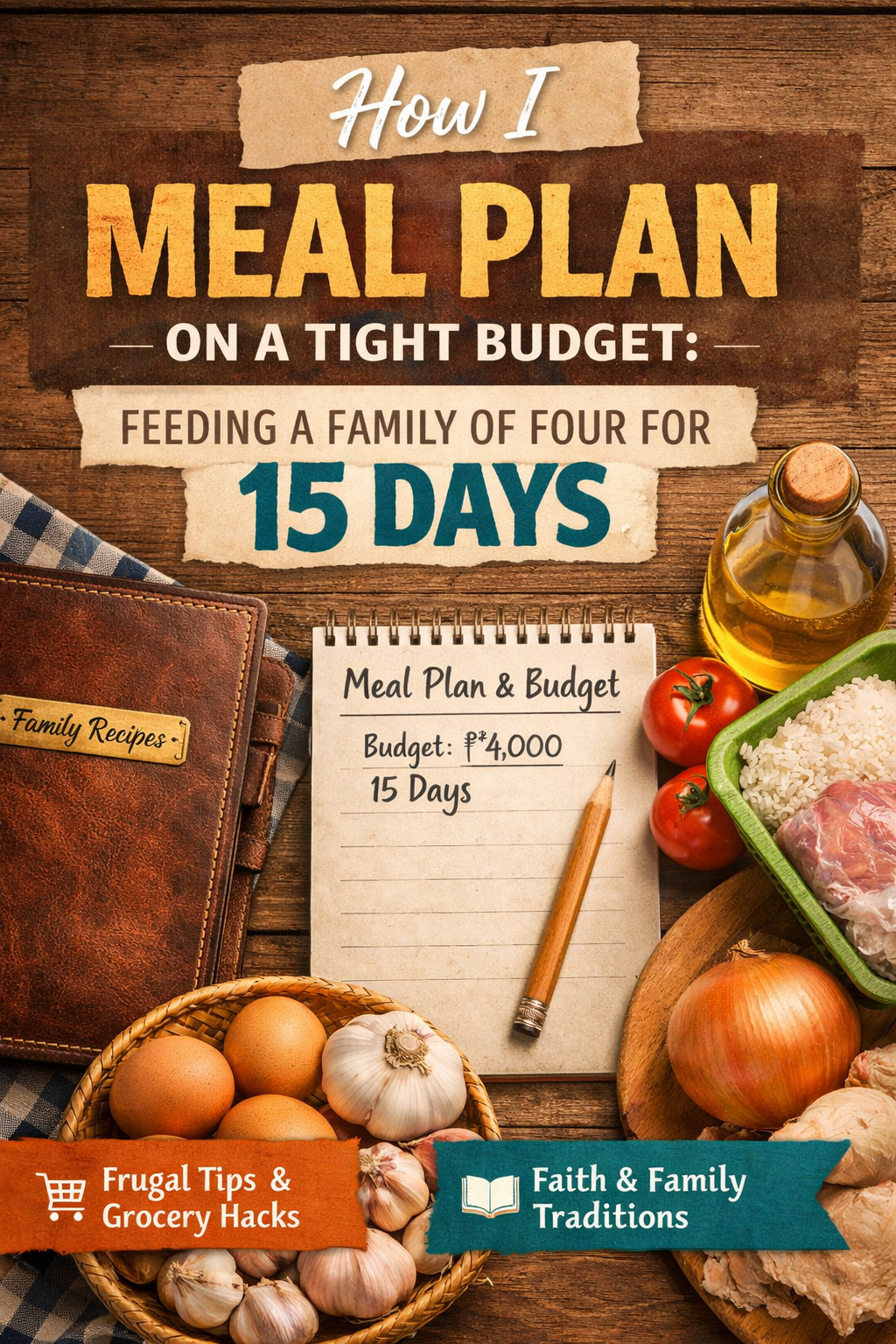
2025 has come and gone, and a brand-new year now lies ahead of me. Still, there are many lessons and habits I developed last year that I’m intentionally carrying into this new season of life. One of the most important is meal planning.
As someone who practices frugality out of necessity, meal planning has helped me stretch every paycheck and make every cutoff meet. This is especially crucial when you’re a solo breadwinner living from payroll to payroll. Because of this, I designed my Vintage Faux Leather Recipe Personalized Binder—a practical and sentimental way to collect proven, tested, and well-loved family recipes. If you’d like me to design more options, feel free to let me know!
Disclosure: This post contains affiliate links. If you click through and make a purchase, I’ll earn a commission, at no additional cost to you. Read my full disclosure here.
In line with my love for meal planning and meaningful food traditions, I recently stumbled upon a beautiful book by Evelyn Vitz:
A Continual Feast: A Cookbook to Celebrate the Joys of Family & Faith Throughout the Christian Year.
This cookbook is filled with wonderful recipes and thoughtful ideas drawn from Christian traditions around the world. It includes more than 275 recipes designed to celebrate holidays throughout the Christian year, as well as the everyday rituals that strengthen family bonds and enrich daily life. The book explains how these rituals, rites, and feasts originated, how they are celebrated globally, and how you can bring them into your own home. It’s also beautifully illustrated.
A Continual Feast gives new meaning to “breaking bread together.” It is both a cookbook and a learning resource, offering:
- Menus for major holidays and everyday meals
- Recipes for church picnics, Sunday suppers, birthdays, name days, confirmations, and baptisms
- Cooking projects for children
- Recipes for Christmas giving and sharing food with others
- Customs tied to Christian holidays from Advent to Pentecost and various saints’ days
- Traditional meanings of foods
- Tips on fasting and abstinence
- Creative ways to use leftovers
- Quotations from the Bible and theological and gastronomic sources
- Recipes from diverse cultural traditions
- A rich blend of Christian history and reflection
Whether you’re looking for a thoughtful gift or a cookbook to use in your own home, you can check it out here.
How I Meal Plan for 15 Days Before My Next Salary
So how do I meal plan for the entire 15 days before my next paycheck arrives? Here are the tips that work for me:
1. Set a clear budget.
Determine your total budget for the full 15 days and count the days carefully. My budget is ₱4,000 for two weeks for a family of four. I know—it sounds impossibly low. But with creativity and discipline, I make it work.
2. Buy main ingredients first.
Instead of listing specific dishes, I focus on core ingredients. I usually buy:
- 1 kilo of meat
- 1 kilo of chicken
- 2 kilos of fish
- 1 kilo of shrimp
- 1 kilo of ground meat
- 15 kilos of affordable rice
- Base aromatics like garlic, onions, chili, and tomatoes
I also make sure I have essentials like oil, vinegar, soy sauce, and Kulina seasoning (I buy these in bulk from Dali). From these ingredients, I decide what to cook day by day.
3. Buy vegetables fresh.
I avoid stocking vegetables since they spoil quickly. I usually buy them after work, on the way home.
4. Cook realistically.
On most days, I cook one or two meals—lunch and dinner. On especially busy days, I buy cooked dishes for lunch and cook only dinner at home.
5. Track prices.
I keep a running list of frequently used ingredients and their prices in Google Sheets. I update it after every wet market or grocery run, which helps me budget accurately.
6. Shop where it’s cheaper.
I compare prices between nearby stores like Puregold and Dali, and I often shop at Pateros Public Market because it’s more affordable than markets closer to home.
7. Don’t forget transportation costs.
I include transportation in my budget—usually around ₱30 for the trip home from the market.
8. Budget for small treats.
When I go to the market with my younger son, we often buy snacks like palamig and maruya. These small treats are part of our routine and worth budgeting for.
9. Portion and store ingredients properly.
Once home, I wash and portion all main ingredients, store them in reused plastic bags, and keep them in the fridge.
10. Plan meals daily, not all at once.
Each day, I check what ingredients are available and plan meals accordingly. I only return to the market once the main ingredients are fully used up.
This system works well for our family. Of course, everyone’s situation is different—but for us, this approach has helped us save more than any other method I’ve tried.